Health and Safety Policy for Deep Cleaning Bow
 At Deep Cleaning Bow, health and safety are central to every cleaning task. This policy outlines the standards, responsibilities, and working practices that help protect cleaners, clients, visitors, and anyone else who may be affected by our services. It applies to all cleaning activities carried out during domestic, commercial, and specialist deep cleaning work. Our aim is simple: to deliver a safe, controlled, and professional service while reducing risk at every stage.
We believe that safe cleaning is not only about using the right products, but also about planning work carefully, understanding the environment, and applying consistent procedures. Deep cleaning often involves moving furniture, using specialist equipment, and handling stronger cleaning agents than standard maintenance work. Because of this, we maintain a proactive approach to safety that includes risk assessment, staff training, supervision, and the correct use of protective measures.
Everyone involved in a Bow deep cleaning project has a role to play. Management must provide suitable resources and clear instructions, while workers must follow safe systems of work and report hazards promptly. Clients are also expected to share relevant information about any known risks, such as fragile surfaces, electrical faults, restricted access, or areas requiring extra care. By working together, we can reduce accidents and ensure the cleaning process is carried out responsibly.
Core Safety Principles
Our deep cleaning Bow policy is built around a few essential principles: prevention, communication, and accountability. Before any job begins, we identify potential hazards and decide how best to control them. This may include isolating wet areas, keeping walkways clear, securing cleaning products, or adjusting tasks to suit the condition of the property. We aim to remove unnecessary risks wherever possible and to manage unavoidable risks with care.
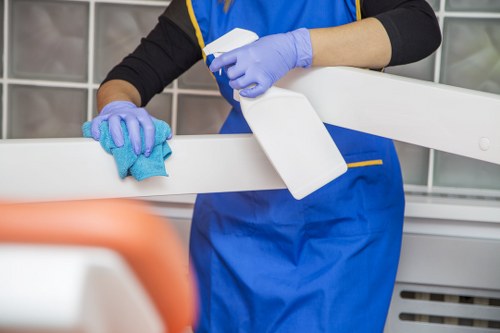
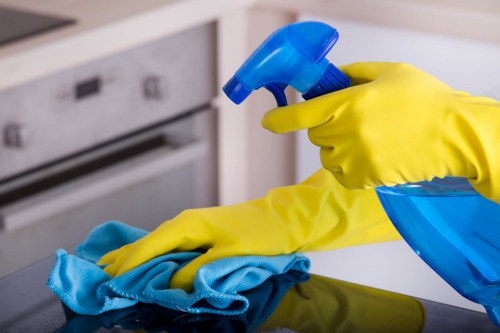
All cleaning chemicals are assessed before use. Products are selected for suitability, labelled correctly, and stored in line with safe handling requirements. Staff are trained to read instructions, follow dilution guidance, and avoid mixing substances that could create harmful reactions. Where appropriate, cleaners use gloves, masks, eye protection, and other personal protective equipment to reduce exposure. Health and safety also means using equipment in the correct manner, checking it before use, and taking it out of service if a fault is discovered.
 Manual handling is another important part of the policy. Deep cleaning sometimes involves lifting bins, shifting furniture, carrying supplies, or reaching into awkward spaces. To reduce strain, we encourage safe lifting techniques, team assistance for heavy items, and thoughtful planning before moving anything substantial. If an item appears too heavy, unstable, or awkward to handle safely, the task is paused until a safer solution is found.
Training, Supervision, and Equipment
Staff training is an ongoing commitment. Team members receive instruction on safe chemical use, infection control awareness, equipment handling, incident reporting, and emergency response. Refresher training is provided when procedures change or when additional support is needed. Supervisors monitor performance to ensure that the standards expected from a Deep Cleaning Bow service are met without compromising safety.
The equipment used during a Bow deep clean must be suitable for the task and maintained in good working order. Vacuums, steam units, cloths, mops, scrapers, and other tools are checked regularly for wear or damage. Faulty equipment is removed immediately and replaced or repaired before use. Cables are kept tidy, access routes are maintained, and working areas are arranged so that trips, slips, and falls are less likely to occur.
 In some settings, additional precautions may be needed to protect vulnerable occupants, sensitive materials, or confined working areas. For example, ventilation may be improved during product use, delicate surfaces may require gentler methods, and rooms may need to be cleaned in stages to avoid congestion. Our approach remains flexible while still following a consistent framework of safe working practices and professional judgement.
Incident Prevention and Emergency Response
Preventing accidents is always the preferred outcome, but we also prepare for incidents should they occur. Spillages are cleaned promptly, warning signs are used where needed, and first aid procedures are clearly understood by staff. Any injury, near miss, or safety concern is recorded and reviewed so that lessons can be learned and improvements introduced. This process supports continuous development and helps strengthen the overall health and safety performance of the service.
Fire safety, electrical awareness, and infection prevention are also considered when planning work. Cleaners avoid overloading sockets, keep liquids away from live electrics, and follow site-specific precautions where relevant. Waste is removed safely, bagged appropriately, and disposed of without creating hazards for others. When dealing with contaminated materials or heavily soiled areas, extra care is taken to protect both workers and the environment through controlled handling and responsible disposal.
Risk assessments are reviewed regularly and updated whenever conditions change. This includes changes to the property, the scope of work, the equipment in use, or any new information that may affect safe delivery. By reviewing hazards before and during the job, Deep Cleaning Bow can maintain high standards while staying alert to emerging risks.
Responsibilities and Compliance
 Management is responsible for providing the structure needed to support safe operations, including training, supervision, equipment, and clear procedures. Workers must follow instructions, use protective equipment correctly, and stop work if they believe a task has become unsafe. Clients are encouraged to cooperate with reasonable safety requests, such as clearing access routes or advising on known hazards. This shared responsibility helps create a safer and more efficient cleaning experience.
We also expect honesty and prompt communication from everyone involved. If a hazard is noticed, it must be reported as soon as possible. If an area is wet, unstable, poorly lit, or otherwise unsuitable for work, the issue should be addressed before cleaning continues. A deep cleaning Bow policy is only effective when safety is treated as a daily practice rather than a written statement.
Our commitment is to maintain a workplace culture where caution, professionalism, and care are valued. Cleanliness and safety should always support one another. By following this policy, we reduce avoidable harm, protect property, and deliver a dependable service that is organised, responsible, and fit for purpose.
Ongoing Review and Improvement
 This policy is reviewed periodically to ensure it remains effective and relevant to current working conditions. Updates may be made in response to new equipment, revised procedures, incident trends, or changes in best practice. The aim is to keep the standards of Bow deep cleaning consistent, practical, and protective for everyone involved.
Through regular review, careful planning, and a commitment to safe methods, Deep Cleaning Bow continues to deliver a service that values people as much as results. Health and safety is not an optional extra; it is an essential part of how we work, from the first assessment to the final sign-off.